Safari Lodges - Hippo Enclosure : West Midlands Safari Park
Services provided:
Landscape Architecture
Concept Design
Visitor Experience Design
Habitat Design
Soft Landscape Design
Planning Support
Detailed Design
Tender & Construction
Visualisation
Stakeholder Engagement & Workshops
On-site Support
Why it matters
Modern zoos are evolving beyond traditional exhibits. Projects such as the Hippo Lodges demonstrate how thoughtful design can:
Increase visitor revenue
Extend seasonal visitation
Support conservation messaging
Enhance animal welfare
Create unforgettable guest experiences
Strengthen long-term masterplans
Safari Lodges - Hippo Enclosure
Project Vision
The Hippo Lodges were conceived to create a truly immersive overnight experience where guests could connect with wildlife in a meaningful and memorable way. Rather than simply overlooking an animal enclosure, the design sought to blur the boundary between accommodation and habitat—allowing visitors to experience the sights, sounds and atmosphere of the African plains while ensuring the highest standards of animal welfare remained at the forefront.
The project forms part of West Midlands Safari Park's wider ambition to diversify visitor experiences while supporting long-term investment in conservation and animal care.
Design Objectives
✔ Create premium overnight accommodation
✔ Expand and enhance the current space for the park’s hippo
✔ Maximise uninterrupted views across the hippo habitat
✔ Integrate architecture sensitively into the landscape
✔ Maintain exceptional animal welfare standards
✔ Minimise visual impact
✔ Enhance the guest journey
✔Creation of new habitat and enhancement of site-wide Biodiversity
✔ Support year-round tourism
Client: West Midlands Safari Park
Project Type: Visitor Accommodation & Safari Masterplanning
Location: Bewdley, Worcestershire, United Kingdom
Sector: Zoo Design | Hospitality | Landscape Architecture
Year: 2023 - 2024
Key project features
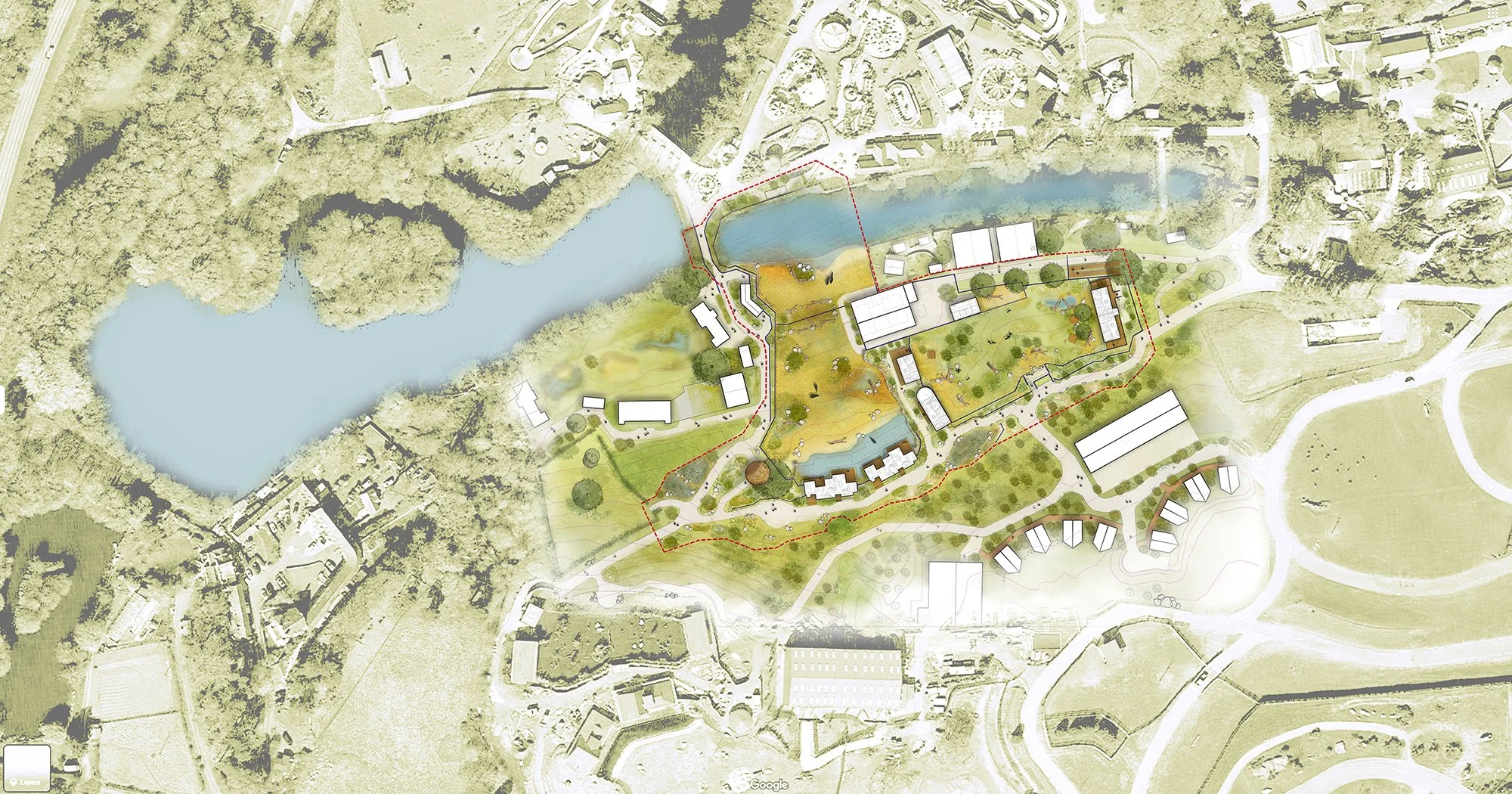
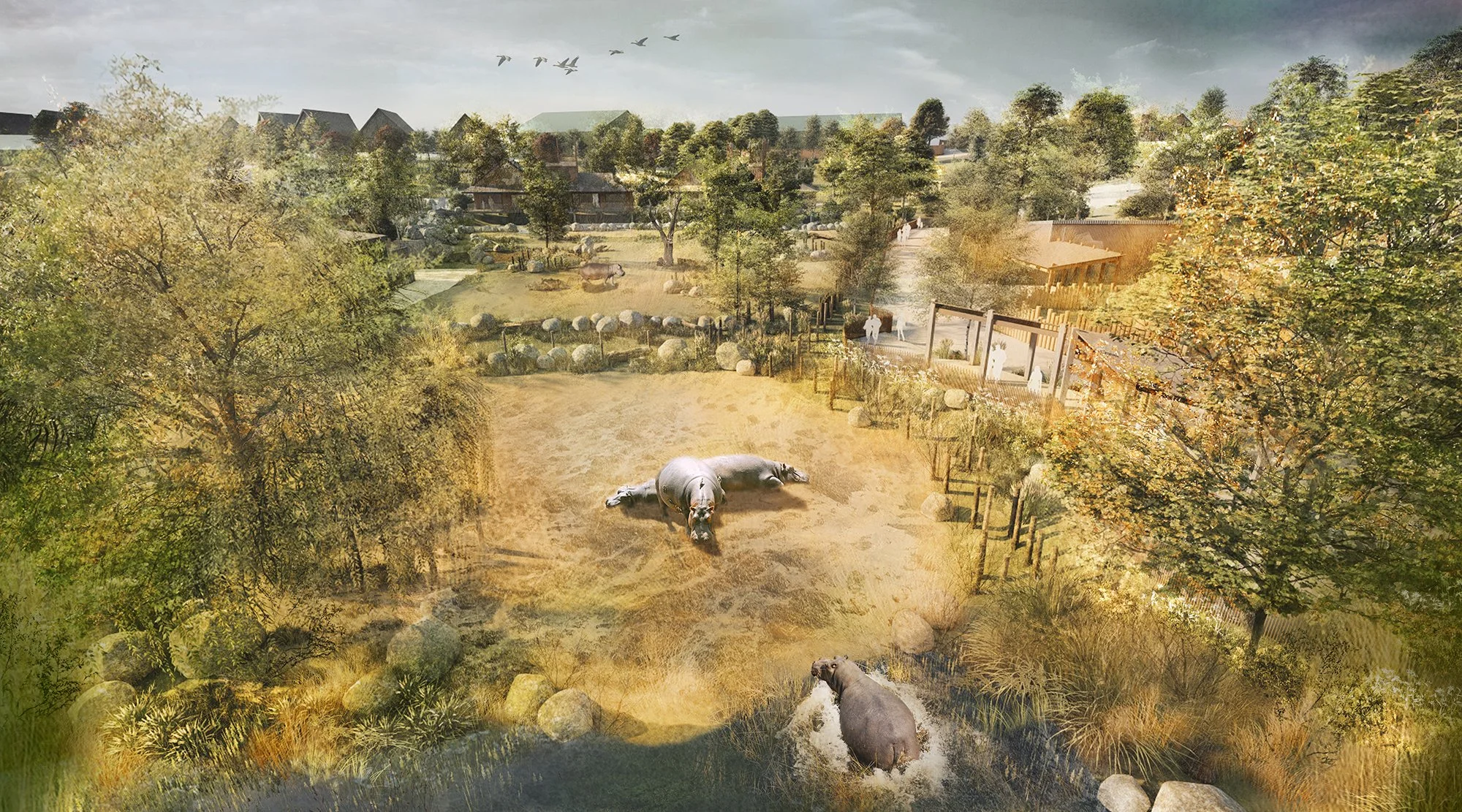
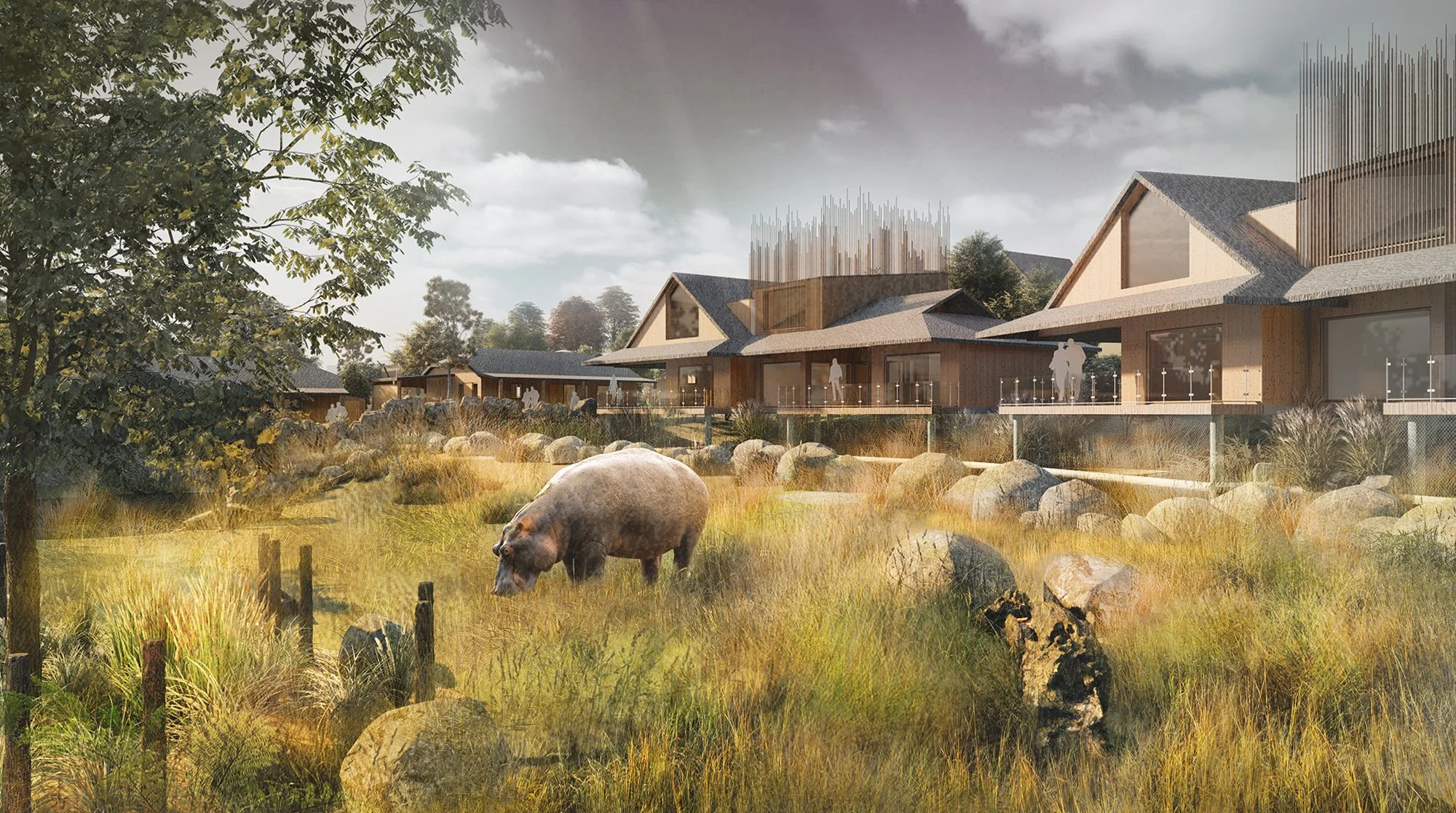
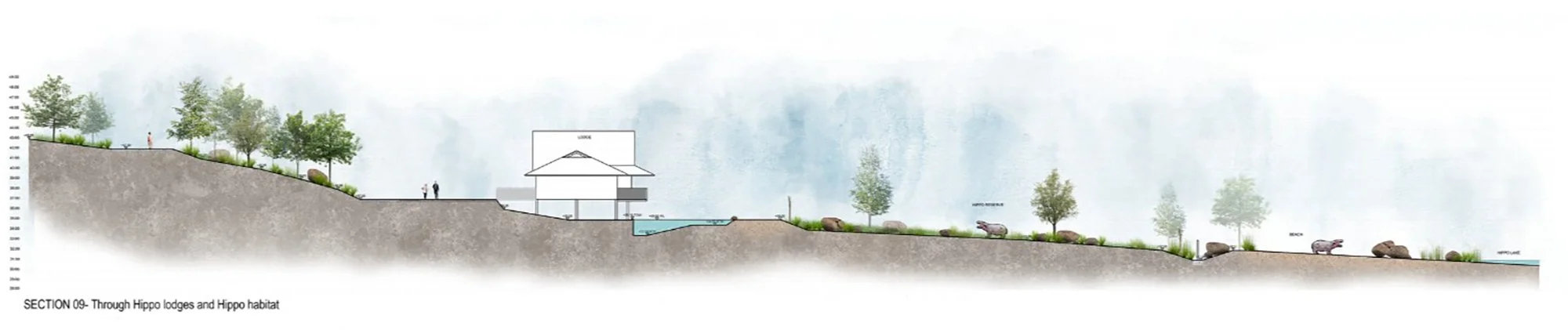
The project includes four lodges, which have been designed to provide views of the park's Hippo Pod as they leave the lake and make their way into their new 3000m2 grassland meadow habitat. These themed lodges will sit above a newly constructed water body and a mud wallow which provides other source of wallowing for the animals. In addition, two of the new African dog lodges will also gain views of the hippo habitat from their private external terraces, providing dual animal viewing.
The overall landscape has been designed to reflect the animal's wetland habitats; an extensive grassland area which features scattered Acacia trees, boulders, logs, and tall grasses will sweep down to the existing lake and provide the animals with new grazing opportunities, enhancing animal natural grazing behaviours.
A new larger animal house will be constructed as part of the scheme to improve the management of these species in captivity while improving keeper facilities. The new house will include a number of offshow stalls and a indoor pool for the animals to enjoy. The scheme will also include a dedicated keeper service yard.
Visitors on the Safari walking trail will witness the animals via a new covered wetland viewing structure, which provides unobstructed views of the animals as they lounge around on the beach, take a dip in the lake or graze the meadows. The hippos will still have access to the current lake and beach, which will be enhanced, providing improved water quality through the use of aerators and reed bed systems, which will also create new wetlands and marginal habitats for native species. Around the existing viewing area, new trees, scrub and grass planting will enhance the immersive quality of the space by screening surrounding attractions.
Project Outcomes
The Hippo Lodges have become one of West Midlands Safari Park's flagship visitor experiences, demonstrating how hospitality and wildlife conservation can successfully coexist.
The project delivers:
✓ A unique overnight safari experience
✓ Increased animal welfare allowing for more species-specific behaviours
✓ Increased visitor dwell time
✓ Enhanced commercial opportunities
✓ Improved guest engagement with conservation
✓ High-quality landscape integration
✓ Enhanced on-site biodiversity
✓ Long-term value for the park